08 — The Gradient Blade (Concept Demonstration)
The IF-1's ultimate test case is a blade — not because anyone needs a sword, but because a blade is a deceptively difficult metallurgical challenge. A real blade requires contradictory properties in a single object: a hard martensite edge for cutting and a tough pearlite spine for shock absorption. Achieving this requires spatially controlled phase transitions — different crystal structures in different regions of the same part.
FIELD 50-Tesla pulsed compaction via Highfield Magnetics coils. Electromagnetic forming to net shape.
GRADIENT Controlled thermal gradient applied: rapid quench at the edge (martensite), slower cooling at the spine (pearlite).
QUENCH Phase Flash cryogenic quench locks in the gradient microstructure.
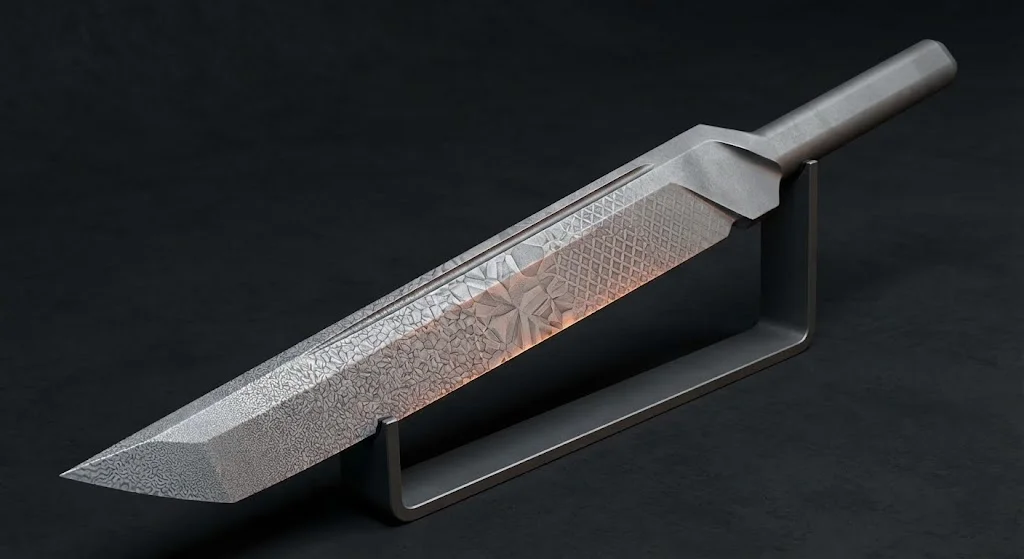
Fig. 7.1 — Gradient blade concept: spatially controlled microstructure
The concept demonstrates spatially varying phase control — the same principle needed for turbine blades, armour panels, and any component where different regions must have different mechanical properties. Japanese swordsmiths achieved a crude version of this 800 years ago by differential quenching. The IF-1 targets the same principle with electromagnetic precision. This is a long-term manufacturing concept, not a current production capability.
Edge ................ Martensite (hard, wear-resistant)
Spine ............... Pearlite (tough, shock-absorbing)
Transition .......... Continuous gradient (no discrete interface)
Compaction .......... Electromagnetic (no mechanical press)
Status .............. Concept demonstration
Significance ........ Spatially programmable microstructure