06 — Manufacturing: The IF-1 Concept
The Instaforge IF-1 is a high-energy materials synthesis concept combining electromagnetic forming, rapid solidification, and programmable alloy injection to produce precision microstructures in metal components. The approach uses pulsed magnetic fields for compaction rather than mechanical pressing — a technique called electromagnetic forming, demonstrated at laboratory scale since the 1960s.
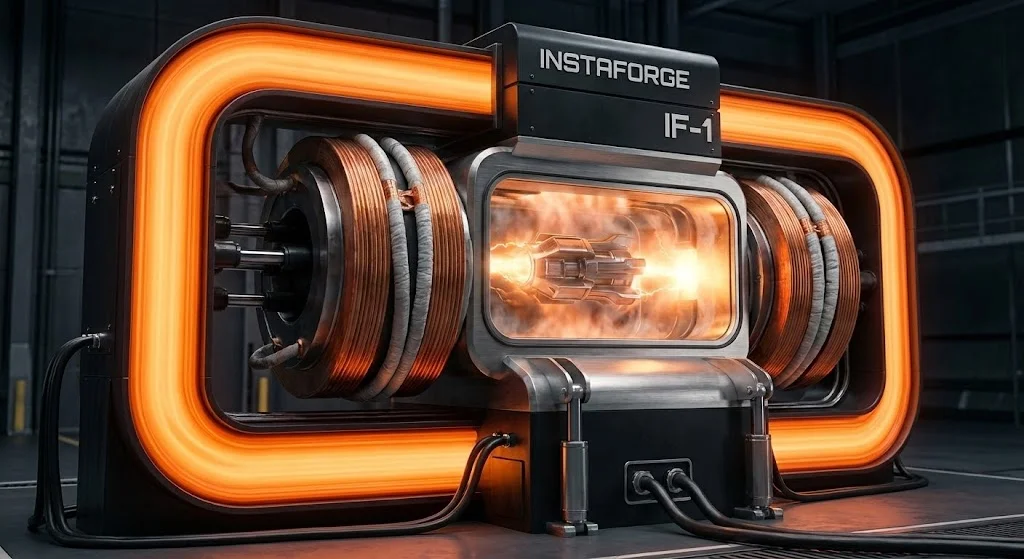
Fig. 5.1 — The Instaforge IF-1 volumetric chamber
Phase 1: Atomisation
Raw ore is dissolved into a plasma cloud using Maxwell Continuum high-powered lasers.
Phase 2: Isotope Sorting
The plasma spins in a Highfield centrifuge, separating isotopes by mass. Carbon-13 (1.1% natural abundance) is diverted; Carbon-12 retained. Iron-54 (5.8% abundance) removed; Iron-56 (91.7%) concentrated. The result is isotopically pure feedstock — the foundation of the 9N purity standard. This level of isotope separation in bulk metals is not commercially practiced; current industrial isotope separation (centrifuge, calutron) operates on gaseous feedstocks at far lower throughputs. Scaling to metal production rates is a significant engineering challenge.
Phase 3: Deposition
Inside the Vapor Vacuum chamber, magnetic nozzles spray atoms onto the target surface layer by layer. Industrial Mode: 1 metre/second. Atomic Precision Mode: 1 millimetre/hour.
Phase 4: Volumetric Induction (The IF-1)
This is not layered 3D printing—that is anisotropic (stronger in X/Y than Z). The IF-1 works in bulk. Alloy powder is suspended in vacuum. A 50-Tesla pulse from Highfield Magnetics coils fires. The Lorentz Force compacts the powder to 100% density in microseconds, while a simultaneous induction shock fuses the lattice. There are no layers. It is a single, solid object.
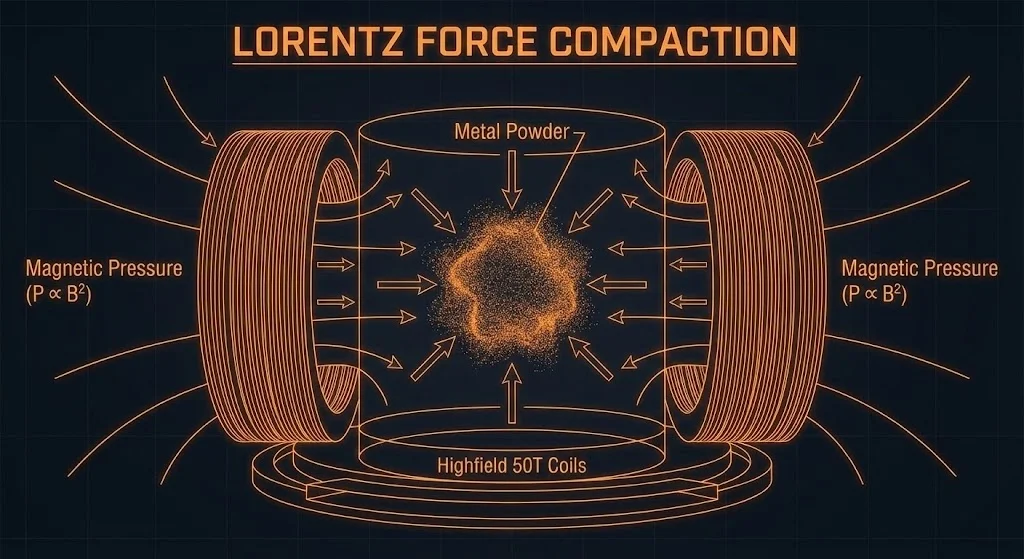
Fig. 5.2 — Lorentz Force compaction: 50-Tesla electromagnetic forming
Phase 5: Rapid Solidification
Rapid quenching at rates exceeding 106 K/s can trap metastable phases — including amorphous metallic glass structures — that are inaccessible through conventional cooling. Gradient microstructures (crystalline surface, amorphous core) are a research target. Achieving this in bulk components rather than thin ribbons remains an engineering challenge.