02 — The Three Engineering Constraints
Most metal failure traces back to microstructural defects. Three categories of defect define the engineering challenge:
CONSTRAINT 1
Grain Boundaries
When metal solidifies, it forms mismatched crystal domains called grains. The interfaces between grains are the primary sites for crack initiation, creep failure, and corrosion penetration. Approach: Single-crystal growth via Bridgman directional solidification. Already standard for jet turbine blades — Metallic Sciences extends this to larger geometries and novel alloy systems.
CONSTRAINT 2
Solubility Limits
Thermodynamic equilibrium restricts which metals can be alloyed together. Many useful combinations phase-separate during conventional solidification. Approach: Vapor-phase deposition and rapid solidification techniques that trap non-equilibrium compositions in metastable solid solutions — extending the range of achievable alloy compositions beyond equilibrium phase diagrams.
CONSTRAINT 3
Impurity Defects
Dissolved oxygen, hydrogen, and nitrogen create inclusions and embrittlement in structural metals. Even parts-per-million contamination degrades performance in superconductor substrates and semiconductor-grade crystals. Approach: Vacuum arc remelting (VAR) in hard vacuum eliminates dissolved gases. For critical applications, isotope-controlled feedstock (e.g., 12C for thermal-grade diamond) reduces phonon scattering — currently at research scale, not yet industrial.
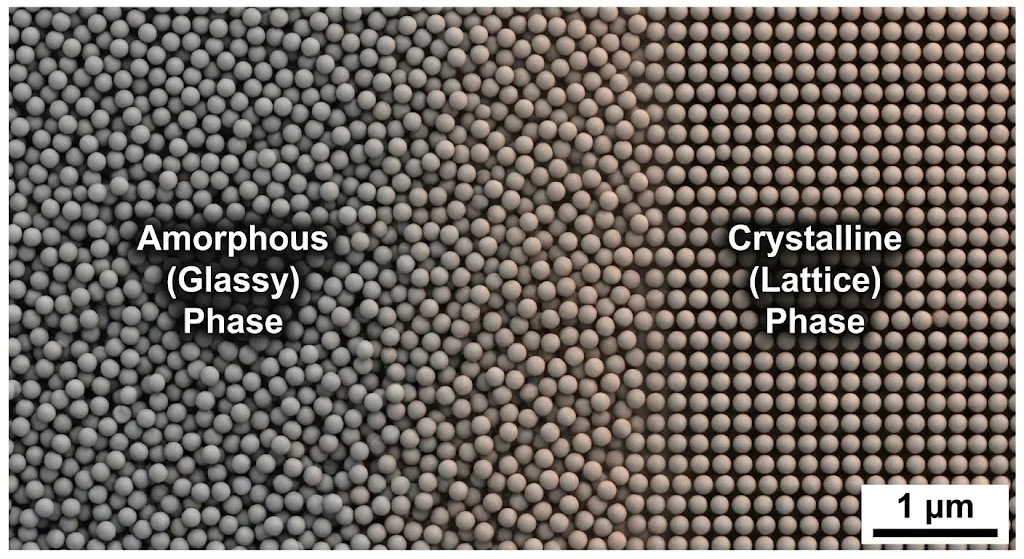
Fig. 2.1 — Gradient grain architecture: programmed crystal structure vs chaotic natural cooling